Cory Blickenstaff Edge Work Physical Therapy

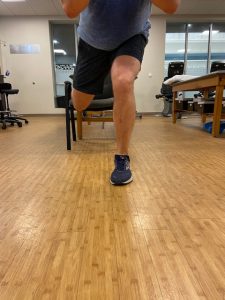
Why Does Bending Your Knee Hurts and What You Can Do

About 25% of U.S. adults experience some type of knee pain, an increase of 65% since the late 1990s. Pain from bending the knee often stems from several causes rather than just one, such as osteoarthritis, nerve impingement, bursitis, and a partial medial or lateral meniscus tear. Overlapping symptoms can

Read more »
pes anserine bursitis knee pain

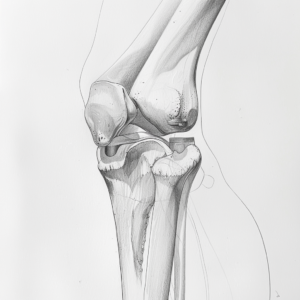
What Is Pes Anserine Bursitis?

Pes anserine bursitis is an inflammatory condition affecting the bursa located between the tibia and the three tendons of the hamstring muscle at the inside of the knee. Pes anserine is Latin for “goose’s foot” because of its shape. It can result from direct trauma, overuse, or as part of

Read more »
Medial meniscus tear football knee pain

Medial Meniscus Tear: Do You Need Surgery?

Your knee consists of a medial and a lateral menisci, one on the inner side (medial) and one on the outer side (lateral), situated between the respective ends of the femur and the tibia. A medial meniscus is a C-shaped cartilage that acts as a cushion and provides stability by

Read more »
jason denayer football soccer hamstring strain

Hamstring Strain: Should You Get a Massage?

A hamstring strain or a pulled hamstring is an injury where one or more of the three hamstring muscles (biceps femoris, semitendinosus, and semimembranosus) get overstretched or torn. It often occurs at the long head of the biceps femoris during the end phase of the leg swing during a sprint.

Read more »
deep vein thrombosis pain behind knee

Should You Get a Massage for Deep Vein Thrombosis?

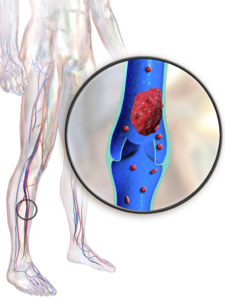
Deep vein thrombosis (DVT) is where a blood clot forms in a vein that is deep in your body, and sometimes, its symptoms can be felt in behind your knee when the clot is formed or forming in the popliteal vein. This can be fatal if the clot breaks off

Read more »
jumper's knee massage

What does a PCL tear feel like? Treatment, recovery, evidence

A posterior cruciate ligament (PCL) tear is an injury in the back of your knee, which can cause pain, instability, and difficulty walking or participating in physical activities. While it’s less common than other types of knee ligament injuries, like an ACL tear or a LCL tear, it still can

Read more »
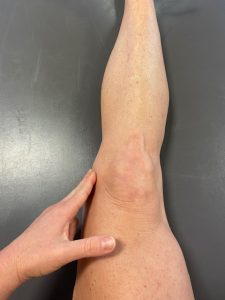
MRI of baker's cyst

Baker’s Cyst: Causes, Symptoms, Treatments, and Massage

A Baker’s cyst, or a popliteal cyst, is the inflammation of a bursa in the back of the knee. This is often caused by rapid accumulation of the fluids in the bursa, which may lead to inflammation from constant rubbing of the muscles and tendons during movement.  While this is

Read more »
massage therapy pain behind knee treatment

Pain Behind the Knee: Causes, Treatments, and Massage

Posterior knee pain may be caused by injuries to areas like the back corners of the knee, the lateral collateral ligament, posterior oblique ligament, or the iliotibial band (IT band). Other causes of pain behind the knee include: Baker’s cyst Hamstring strain PCL tear Vascular problems in the posterior thigh

Read more »
rugby acl tear injury

ACL Tear: Symptoms, Diagnosis, Treatment, and Massage

An ACL (anterior cruciate ligament) tear is a common knee injury that occurs when that ligament in the knee is stretched too far, partially torn, or completely torn. This ligament helps stabilize the knee joint and is crucial for activities that involve sudden changes in direction or sudden stops, such

Read more »
shoulder rotator cuff rehab at the beach

How Reliable Are Torn Rotator Cuff Tests?

There are many shoulder tests that can help rule in or rule out a rotator cuff tear. These include: Drop arm test Belly press test Lift off test Empty can test Full Can test Hornblower’s test Bear hug Physical therapists use these tests based on the size, location, age, and

Read more »
shoulder joint bursa

Massage and Exercises for Shoulder Bursitis

Shoulder bursitis is an inflammation of the bursa, a small fluid-filled sac in the shoulder joint that acts as a cushion between the bones and soft tissues. A bursitis occurs when the bursa becomes inflamed and irritated. This can lead to pain, swelling, and reduced range of motion in the

Read more »