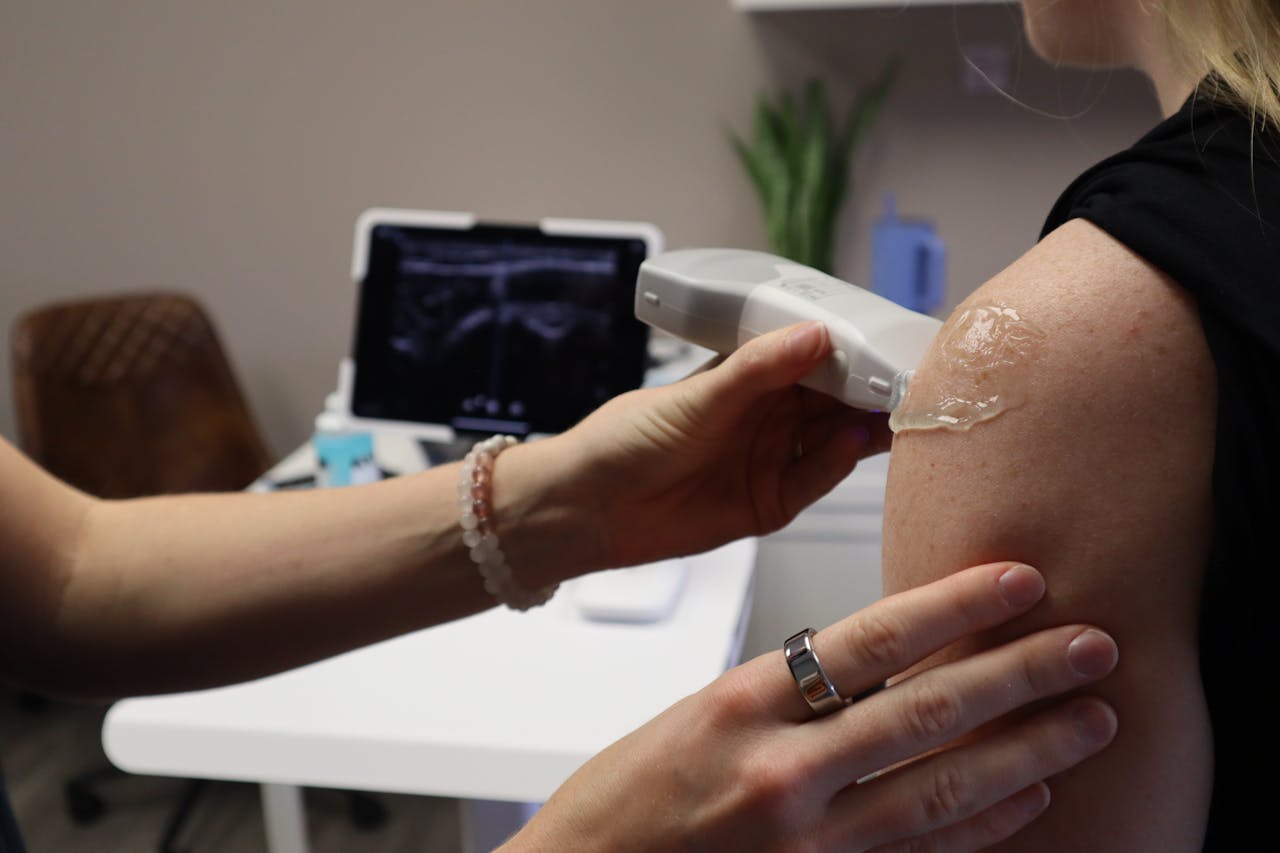
Shoulder abnormalities, such as osteoarthritis and rotator cuff tears, do not always mean they are the primary cause of shoulder pain. A 2024 systematic review published in Osteoarthritis & Cartilage found 30% to 75% of the general population with such shoulder abnormalities are asymptomatic.
Although researchers Ibounig et al. wrote the prevalence of shoulder abnormalities among asymptomatic people is unknown, they reported that abnormalities “appear to be nearly as common in asymptomatic as in symptomatic shoulders, indicating that care is needed when making causal inferences between imaging findings and shoulder symptoms.”
They pointed out similar findings among people with degenerative changes in the lumbar spine.
The researchers included 35 studies consisting of four X-rays, 10 ultrasounds, 20 MRIs, and one combined X-ray and MRI study. The population in the studies are a mix of athletes who perform a lot of overhead movements, community volunteers, and patients in a health care facility.
Despite the findings, the researchers wrote that there is a high risk of bias and uncertainty because of inconsistencies in how the studies were set up, how “asymptomatic” was defined in the studies’ questionnaires, study populations and imaging protocols.
“This also applies to our choice to report abnormalities per limb rather than per person,” Ibounig et al. wrote. “In some studies, both limbs from the same person were included, which could inflate the number of normal limbs by disregarding the likelihood of the contralateral shoulder being structurally normal when one shoulder is normal.”
The researchers reported each shoulder condition.
Glenohumeral osteoarthritis
- Number of studies: 11 (X-ray, MRI)
- Age: Average of 65 (population-based); average of 42 (non-population-based)
- Asymptomatic: 17% (population-based), 15% (non-population-based)
- Symptomatic: 23–60% (population-based only)
Labral abnormalities
- Number of studies: 20 (predominantly MRI)
- Age: Average of 65 (population-based); average of 33 (non-population-based)
- Asymptomatic: 20% (population-based), 43% (non-population-based)
- Symptomatic: 10% (population-based), 0–66% (non-population-based)
Humeral head cysts
- Number of studies: 11 (X-ray, MRI)
- Age: Average of 35 (non-population-based); prevalence increased with age from 8% (19–39 years) to 27% (61–88 years)
- Asymptomatic: 5% (population-based), 30% (non-population-based)
- Symptomatic: 10–24%
Long head of biceps tendon abnormalities
- Number of studies: 21 (ultrasound and MRI)
- Age: Prevalence increased from 0–7% (20–29 years) to 28% (60-plus years)
- Asymptomatic: 30% (population-based), 12% (non-population-based)
- Symptomatic: 80% (population-based), 9–45% (non-population-based)
“To determine the true age-specific population prevalence of shoulder imaging abnormalities, further studies that include large representative samples of the general population are needed,” Ibounig et al. wrote. They added that they are conducting a study that includes 600 people in Finland between 40- to 70-years old.
The bigger picture
Previous reviews and studies found similar results. A 2014 systematic review published in Journal the Shoulder and Elbow Surgery examined 30 studies (6,100-plus shoulders total) that reported rotator cuff abnormalities with increasing age. Researchers Teunis et al. categorized shoulder abnormalities prevalence into four groups:
- Asymptomatic patients
- General population
- Symptomatic patients
- Patients after shoulder dislocation.
Among patients who were 20 years old and younger, 29 out of 299 (9.7%) had signs of abnormalities, while 166 out of 268 (62%) patients ages 80 years and older had various abnormalities. Such prevalence occurred regardless whether the patients had symptoms or shoulder dislocation or not.
Teunis et al. reported that MRI imaging tends to interpret rotator cuff abnormalities as “tears” and cannot reliably or accurately determine whether they are caused by lesions or are just normal variations or age-related changes.
“The prevalence of rotator cuff abnormalities in asymptomatic people is high enough for degeneration of the rotator cuff to be considered a common aspect of normal human aging and to make it difficult to determine when an abnormality is new (e.g., after a dislocation) or is the cause of symptoms,” the researchers concluded.
Early research in shoulder abnormalities and pain told a similar story. A 1995 study published in Journal of Bone and Joint Surgery reported 33 out of 96 subjects (34%) showed signs of a rotator cuff tear, with 14 full tears and 19 partial tears.
Age was a strong predictor. None of the youngest subjects — ages 19 to 39 — had any tears. However, those aged 40 to 60, about 1 in 4 had a partial tear and about 1 in 25 had a full tear. In subjects older than 60, the rates climbed further, with more than 25% showing either a full or partial tear.
The findings suggested that imaging alone could not reliably explain a patient’s shoulder pain.
Other research suggested that rotator cuff tears do not always interfere with normal shoulder function. A 1992 study of 12 shoulders found massive rotator cuff tears using fluoroscopic imaging and found that normal shoulder function remained possible, but only under specific conditions. The author Dr. Stephen Burkhart from the University of Texas Health Science Center in San Antonio reported that as long as the posterior portion of the rotator cuff was sufficiently intact, the shoulder can still move and perform normally.
(Although 12 shoulders is a very small sample size, it is an early study that tests small samples to a hypothesis before using larger populations.)
A 2009 study from Journal of Bone and Joint Surgery found a correlation between shoulder strength and asymptomatic rotator cuff tears that increase with age. Among 237 subjects, shoulders with larger full-thickness rotator cuff tear had significantly decreased isolated abduction strength. However, not all asymptomatic shoulders were weaker than healthy shoulders, the researchers reported.
“We also noted that in individuals who were seventy years of age and older, the shoulders with a full-thickness tear had significantly decreased abduction strength compared with normal shoulders regardless of the size of the tear,” the researchers wrote.
Updated March 28, 2026. First published June 15, 2015.

Nick Ng, BA
Nick Ng is the editor of Massage & Fitness Jounal and the managing editor for My Neighborhood News Group.
An alumni from San Diego State University with a bachelor’s degree in graphic communications, Nick had also completed his massage therapy training at International Professional School of Bodywork in San Diego in 2014. In 2021, he earned an associate’s degree in journalism at Palomar College.
When he gets a chance, he enjoys weightlifting at the gym, salsa dancing, and exploring new areas in the Puget Sound area in Washington state.