Chronic pain is often discussed in terms of injuries, underlying medical conditions and how the nervous system processes pain. But the circumstances in which people live may also influence whether pain develops and how much it interferes with daily life.
Income, education, employment, housing and access to healthcare can shape the resources available to people when they become ill. These circumstances may affect whether someone can obtain medical attention, manage existing symptoms or prevent pain from becoming more disabling.
A 2026 study published in AJPM Focus examined the relationship between socioeconomic position and the development of high-impact chronic pain among U.S. adults. Researchers found that people with lower socioeconomic positions were generally about twice as likely to develop high-impact chronic pain compared with those in more advantaged circumstances.
High-impact chronic pain refers to pain experienced on most days or every day that also frequently limits daily activities or work. Unlike measures that focus only on pain intensity, this definition considers how pain affects a person’s ability to function.
The findings suggest that understanding chronic pain may require looking beyond individual medical conditions to the social and economic circumstances surrounding them.
What did the researchers find?
The study, led by Dr. Flavia P. Kapos of Duke University School of Medicine, analyzed data from 9,534 adults participating in the National Health Interview Survey between 2019 and 2020.
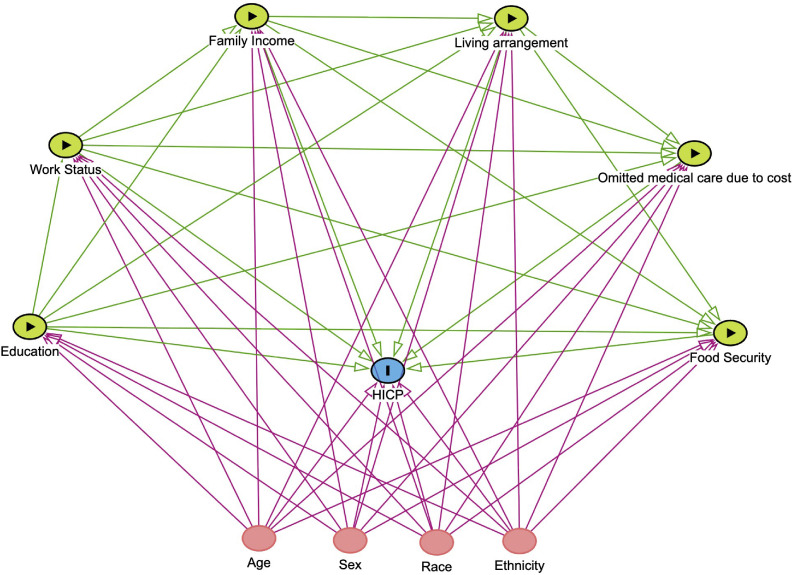
The researchers examined six socioeconomic indicators: educational attainment, family income, employment status, living arrangements, food insecurity and whether participants had forgone medical care because of cost.
None of the participants had high-impact chronic pain when the study began. However, some already experienced low-impact chronic pain, meaning they had frequent pain that did not regularly interfere with life or work activities.
Over the following year, 4.3% of participants developed high-impact chronic pain.
The difference was particularly noticeable among people who already had chronic pain. About 14.2% of those with low-impact chronic pain developed high-impact chronic pain, compared with 2.6% of those who did not have chronic pain at baseline.
Socioeconomic differences were also associated with the likelihood of developing more disabling pain. The researchers examined six factors:
- Education: Adults with a GED or less than a high school education had 2.1 times the risk of developing high-impact chronic pain compared with those with a bachelor’s degree or higher. A similar association was observed among participants with low-impact chronic pain.
- Employment: Those who reported being unable to work because of health-related disabilities had 6.47 times the risk of developing high-impact chronic pain compared with those working full time. Among those with low-impact chronic pain, the adjusted risk was 2.38 times higher.
- Income: Those living below the federal poverty threshold had 2.25 times the risk of developing high-impact chronic pain compared with those whose family incomes were at least four times the poverty threshold.
- Housing: Adults who rented their homes had 1.57 times the risk of developing high-impact chronic pain compared with homeowners.
- Healthcare access: Adults who reported foregoing needed medical care because of cost had 1.92 times the risk of developing high-impact chronic pain compared with those who did not report that barrier.
- Food insecurity: Those experiencing very low food security had 3.36 times the adjusted risk of developing high-impact chronic pain compared with those reporting high food security.
These findings do not mean that everyone experiencing financial hardship will develop chronic pain. They do, however, suggest that socioeconomic disadvantages are associated with measurable differences in risk across the population.
Kapos said the research was intended to draw attention to how circumstances beyond individual behavior can affect health.
“Our main goal is to draw attention to how the social context can protect or put people at greater risk of high-impact chronic pain,” she told Massage & Fitness Journal in an email interview.
She explained that social structures and systems can make it easier or more difficult for people to maintain their health or minimize the impact of pain when it occurs.
How was the study conducted?
Kapos et al. conducted an observational cohort study using the National Health Interview Survey, which collects information about the health and living circumstances of adults across the U.S. They used longitudinal data, which allowed them to examine participants’ socioeconomic circumstances in 2019 and determine whether they developed high-impact chronic pain by 2020.
Participants were divided into two groups based on their initial pain status: those without chronic pain and those with low-impact chronic pain. The researchers defined low-impact chronic pain as pain experienced most days or every day during the previous three months that never or only sometimes interfered with daily activities or work.
Researchers then estimated the incidence of high-impact chronic pain across different socioeconomic categories.
Their statistical models accounted for several factors that could influence the relationships, including age, sex, race, ethnicity and socioeconomic factors.
Since the study was observational, the results cannot establish that low income, food insecurity or limited healthcare access directly caused high-impact chronic pain.
The findings also relied on self-reported information, which can be affected by memory and reporting differences. Kapos et al. acknowledged that the socioeconomic indicators examined did not capture every aspect of a person’s social environment.
“This was the first time that nationally representative data were available to show this link between socioeconomic position and the new onset of high-impact chronic pain in U.S. adults,” Kapos said.
Why might socioeconomic status matter?
The relationship between socioeconomic circumstances and health is not unique to chronic pain. Researchers have long documented what is commonly described as a social gradient in health, in which people with higher socioeconomic positions tend to experience better health outcomes on average.
“The ‘social gradient’ where people with higher socioeconomic positions have, on average, better health has been shown across many types of diseases, unfortunately,” Kapos said, adding that people with greater socioeconomic resources may have more flexibility to avoid health risks and prevent illness.
For example, financial resources can influence whether someone can afford medical appointments or manage expenses while dealing with a health problem. Employment and living circumstances may also affect the options available when symptoms begin interfering with daily activities.
Kapos et al. examined several indicators separately because socioeconomic position is not determined by income alone. Education, employment, housing and access to necessities can reflect different dimensions of disadvantage.
The study’s findings showed that these circumstances were associated with differences in high-impact chronic pain incidence, although the strength of those associations varied between socioeconomic measures and between participants with and without existing chronic pain.
For Kapos, the results point to a broader need to address health disparities beyond individual clinical encounters.
“Our study demonstrated this gradient for high-impact chronic pain, which means there is a lot of improvement needed across multiple levels in society (e.g., policies and programs) for all people to be healthy and able to function well,” she said.
What does this mean for physical therapists?
While the study did not investigate whether specific physical therapy treatments reduce socioeconomic disparities in chronic pain, its findings raise questions about how clinicians might account for these circumstances when evaluating and treating patients.
Kapos believes one important application is changing how healthcare professionals understand and discuss pain.
“The most important application for practitioners is a shift in how we think about and talk about pain – a ‘zoom out’ to see a bigger picture of causes and consequences of pain beyond the individual,” she said.
This perspective does not suggest that physical therapists should abandon individual treatment approaches. Rather, it encourages them to consider how patients’ environments and resources may affect their health and ability to follow a treatment plan.
Kapos also emphasized the importance of helping patients access resources and advocating for improvements beyond the clinic.
“But we can also use our voices as healthcare professionals to advocate for better social structures and systems that allow everyone to live with dignity — because we know how those things affect the health of our patients,” she said.
Can earlier intervention prevent more disabling pain?
One of the study’s most notable findings was the difference between adults who began the study without chronic pain and those already experiencing low-impact chronic pain.
The latter group had a substantially higher one-year incidence of high-impact chronic pain, suggesting that people experiencing persistent but less disabling pain may be an important population for prevention efforts.
This distinction matters because chronic pain does not always interfere with daily functioning to the same degree. A person may experience pain regularly while continuing to work, exercise or perform household activities. For others, pain may increasingly interfere with those activities over time.
The study did not identify which treatments could prevent that progression, but Kapos sees an opportunity for clinicians to focus on preserving function.
“Yes, preventing high-impact when chronic pain is already present seems like a clear window of opportunity,” she said.
She added that setting care goals around function could help pain providers maintain an appropriate focus.
Kapos also suggested that greater access to affordable community-based primary care could support prevention, particularly because pain often occurs alongside other health problems.
What questions remain?
Kapos et al. acknowledged the need for more research examining how different social positions and disadvantages intersect. They suggested future research should examine whether addressing specific barriers, such as food insecurity or the cost of medical care, could reduce the incidence of high-impact chronic pain.
Kapos said there needs to be a shift away from traditional research that primarily focuses on individuals.
“The biggest unanswered questions are in the realm of interventions,” she said. “We have solid (and growing) evidence that social problems affect health and affect pain.”
The findings also leave questions about how physical therapists and other healthcare professionals can best incorporate social circumstances into patient care without assuming that any single factor explains a person’s pain.
“Pain is not a personal failure and we don’t live in a vacuum,” she said.
Further reading
Health equity in pain science: Rebuilding how research measures human experience
Weight discrimination and chronic pain

Dezare Lozano
Dezare graduated from of San Diego State University in 2025 where she earned a degree in journalism with a minor in English. During her studies, she emphasized news writing and gained experience reporting and producing news stories.
Dezare is focused on expanding her skills across additional areas of journalism, including working in a newsroom at a large newspaper organization and traveling to capture compelling photojournalism. She also aspires to become a journalism professor in the future.
In her free time, Dezare enjoys sharpening her camera and writing skills. She also likes cooking, animating, and working on creative writing side projects.