Static stretching is a type of stretch where you hold the lengthening position of a muscle for a period of time. While many have followed the stretching ritual before a workout for many years, scientific research in the past decades has found that static stretching has mixed results in improving strength and athletic performance.
A 2025 systematic review and meta-analysis of 65 studies representing 1,542 adults by Ingram et al. found both acute and chronic static stretching contribute a small reduction in muscle and joint stiffness. The authors reported that there’s “insufficient evidence” that 24 weeks of moderate- to high-intensity stretching increase fascicle length. Fascicles are bundles of muscle fibers wrapped by perimysium, a type of connective tissue.
Only chronic stretching increased stretch tolerance, according to Ingram et al., indicating mechanical and neural adaptations.
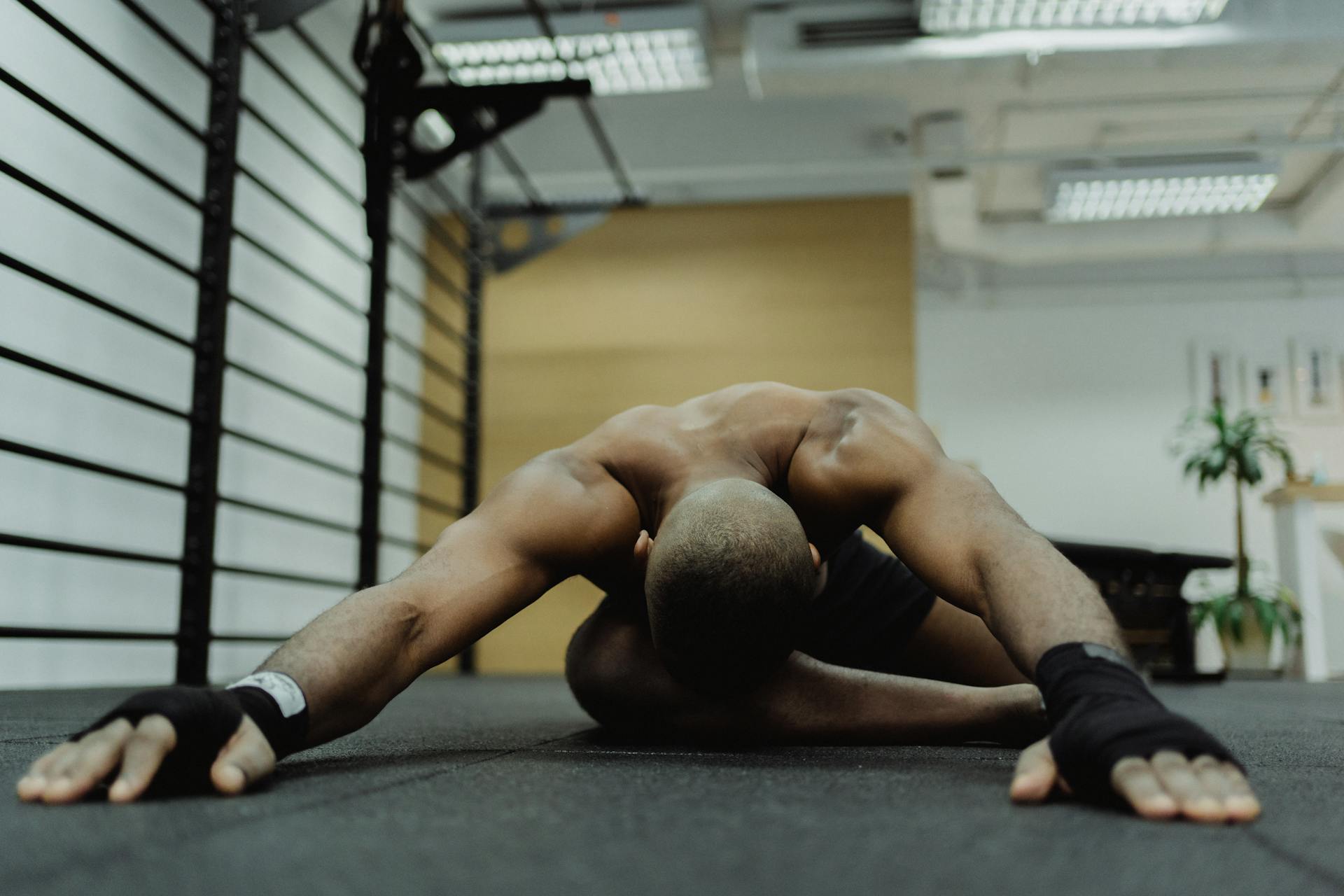
While some studies have found static stretching can decrease strength and power, the range of motion benefits may exceed the cost of temporary reduction of muscle stiffness, such as in floor gymnastics.
However, for sports that rely on explosive movements, such as football, the authors said the temporary decrease in stiffness could reduce elastic energy return and potentially hinder performance. Instead, they suggested athletes in power-based sports perform static stretching after training or competition if their goal is to improve range of motion over time.
The findings may also influence rehabilitation. For patients recovering from prolonged immobilization and joint contractures, Ingram et al. wrote long-term range of motion gains appear to result mainly from improved stretch tolerance rather than structural changes in muscle. Therefore, clinicians seeking to increase muscle fascicle length “may lead them to consider another intervention such as eccentric resistance training,” they wrote.
~~~~
Types of static stretching
Static stretching can be passive or active. Passive stretching is where you stretch a muscle group by holding the stretch with another body part or person (like PNF stretching).
For example, you can stretch your chest by placing your forearms against a doorway while standing and lean your body forward to stretch. Another way is to stand and bend forward to touch your toes, letting gravity to help you increase the stretch.
In active stretching, you contract the muscle group that is the opposite of the muscles that you are stretching. For example, if you’re stretching your hamstrings, you tense your quadriceps for about 5 to 10 seconds, then relax, and then repeat.
There’s very little research to determine which type is better for improving range of motion or athletic performance, but one Brazilian study in 2011 found that there’s not much difference in hamstring flexibility between passive and active stretching among a group of 60 men. Both groups have similar gains in range of motion compared to the control group that did no stretching.
Static and dynamic stretching
Static stretching is where you hold a stretch for about 30 seconds, while dynamic stretching involves moving one or more joints repetitively through a range of motion. Don’t confuse dynamic stretching with ballistic stretching because the latter moves the joint in a fast, repetitive manner. Ballistic stretching relies more on momentum rather than control.
While dynamic stretching is often used before you exercise, some scientific evidence shows static stretching can help relax your mind and body, such as reducing the risk of getting leg cramps among older adults. When combined with moderate exercise, static stretching “may improve sleep quality in sedentary, overweight, postmenopausal women,” according to one Dutch study in 2003.
What other research says
Some research finds that dynamic stretching is a better option than static stretching for warming up because it prepares your brain and muscles to perform the movement patterns for your sport or activity. One 2008 systematic review finds that static stretching does not prevent overall injuries, but there are some studies that say it may prevent some muscle and tendon injuries.
The studies that said there is no reduction in overall injury rates included non-muscle and joint injuries, such as bone fractures and blood vessel injuries, which static stretching couldn’t have prevented.
A 2019 narrative review found that how long you stretch may have little to no effect on injury prevention and decreasing performance. The authors summarized that static stretching for less than 60 seconds has “trivial negative effects” on strength and power right after the stretching.
When static stretching is combined with dynamic warm-ups, it may even lower the risk of certain types of injuries (e.g. marathons vs. 100-meter sprint, tae kwon do vs. wrestling). The authors recommended that static stretching should be “part of a warm-up component in recreational sports due to its potentially positive effect on flexibility and musculotendinous injury prevention.”
However, for “high-performance” athletes, like American football players, they should take extra precautions with static stretching since it may likely reduce the power output.
Physical therapist and Research Director Paul Page from the Franciscan University DPT program in Baton Rouge, Louisiana, reported that static stretching can be done at least two to three days per week, and each stretch should be held 15-30 seconds and repeated two for four times — based on guidelines from the American College of Sports Medicine.
But some researchers suggested that stretching isn’t even necessary to improve your flexibility. For example, a team of researchers reviewed 11 studies with a total of 452 subjects and found that both strength training and stretching work just as well in increasing flexibility.
They concluded that strength training and stretching “were not statistically different in [range of motion] improvements” in the short term. In other words, you can get similar benefits from strength training as stretching.
Static stretching exercises
Standing toe touch
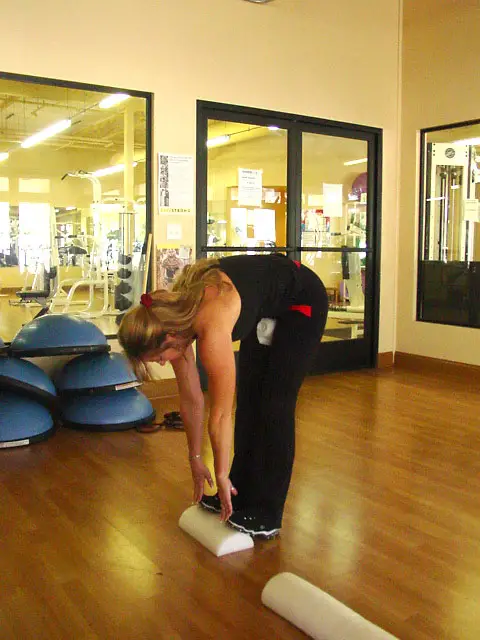
- Stand with your legs together or slightly apart.
- Raise your arms over your head and inhale.
- Exhale as you bend forward to reach for your toes. Do not bounce as you stretch. Hold the position for 15-30 seconds.
- Repeat 2 to 3 times. Use a half-foam roll or similar device if you’d like.
Standing quadriceps stretch

- Stand and bend your right knee. Reach and hold your right ankle with your right hand.
- Hold onto a sturdy surface with your left hand, such as a wall or table as you hold the stretch. You may add a slight hip extension to increase the stretch if needed.
Lat stretch with stability ball
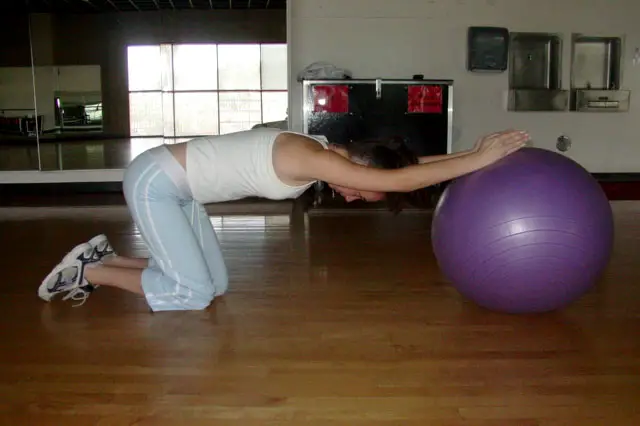
- Kneel on both knees with a stability ball in front of you.
- Place both hands in a karate chop position on top of the ball.
- Shift your weight toward your buttocks and lower your hips toward your heels.
- Push the ball forward by extending your arms. Relax your body as you hold the stretch.
3-D neck stretch
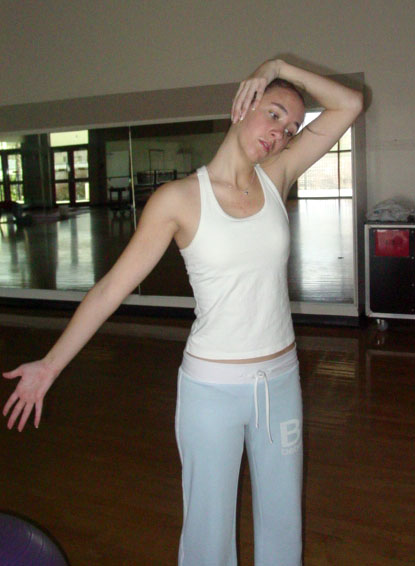
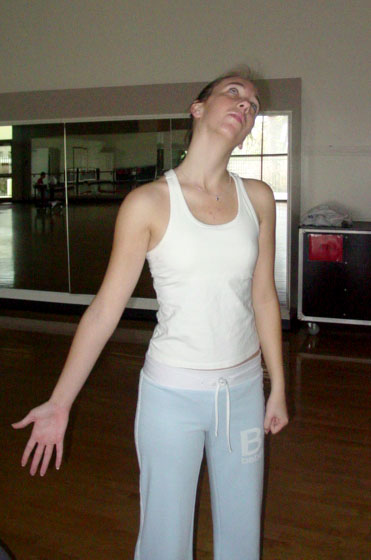
This stretch focuses on the sternocleidomastoid, levator scapulae, upper trapezius, scalenes, and other muscles of the neck and upper shoulders.
- Tilt your head to your left while extending your right arm to your right side with your right palm facing up. Hold the stretch and repeat it on the other side.
- Tilt your head to your left, and then tilt your chin down toward your left chest. Hold the stretch and repeat it on the other side.
- Tilt your head to your left and then tilt your chin up until you feel a stretch in the right front part of your neck. Hold the stretch and repeat it on the other side.
Cobra stretch
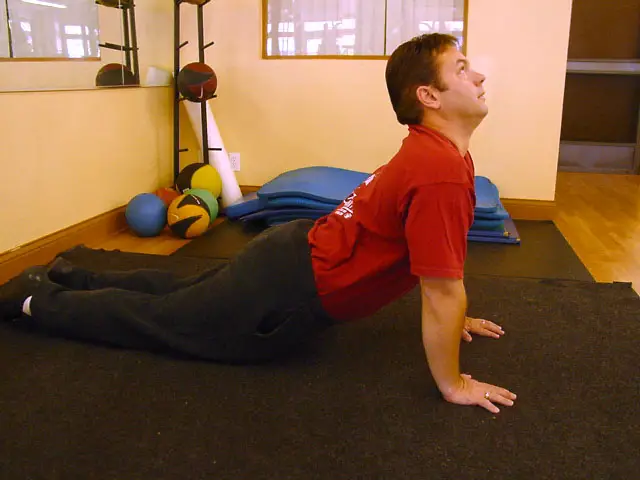
- Lie on your stomach on the floor with your hands beneath your shoulders like you are going to do a push-up.
- Lift your chest off the floor and push up with your arms.
- Tilt your head back to increase the stretch in the front of your neck.
- Take deep, steady breaths as you hold the stretch.
Updated July 28, 2026. Originally published Jun 10, 2020.

Nick Ng, BA
Nick Ng is the editor of Massage & Fitness Jounal and the managing editor for My Neighborhood News Group.
An alumni from San Diego State University with a bachelor’s degree in graphic communications, Nick had also completed his massage therapy training at International Professional School of Bodywork in San Diego in 2014. In 2021, he earned an associate’s degree in journalism at Palomar College.
When he gets a chance, he enjoys weightlifting at the gym, salsa dancing, and exploring new areas in the Puget Sound area in Washington state.