Your client is filling out your massage intake form and hesitates over the question about pregnancy. “I tested positive on a home pregnancy test this morning, but I don’t know how accurate the test is,” she tells you. “I’ll re-test in a couple of days to confirm if I’m really pregnant. What should we do about the massage today?”
As a healthcare professional, what would you tell her?
None of the massage regulatory guidance will tell you:
- “Yes, go ahead with the massage.”
- “No, don’t massage her at all!”
- “Here’s exactly how you modify your massage to make it as safe as possible for your client.”
Instead, professional massage sources in the U.S. tend to provide general guidelines such as “get appropriate education about pregnancy massage” or “work gently”.
And there are good reasons for that: There is no one-size-fits-all, cookie-cutter approach to any massage or client, which is part of the wonder that is massage therapy. But that wonder doesn’t make it easy to come up with an answer in the moment for your client’s specific questions.
As a healthcare professional, you’ll consider the risks for massage in pregnancy in general, as well as for someone with this client’s medical history, in order to make recommendations. You’ll also consider how likely these risks are to occur, and how large a role they should play in your shared decision-making with the client.
Statistics can help you consider how likely something is to happen. In research, sensitivity and specificity are two metrics that are often used to answer that question.
Because she’s taken a pregnancy test with a positive result, consider these questions:
- Of people who test positive for pregnancy, how many are actually pregnant because the test correctly identified them (true positives)?
- Of people who test positive for pregnancy, how many are actually not pregnant because the test wrongly misidentified them (false positives)?
There might be other situations where additional questions are helpful, such as:
- Of people who test negative for pregnancy, how many are actually not pregnant because the test correctly identified them (true negatives)?
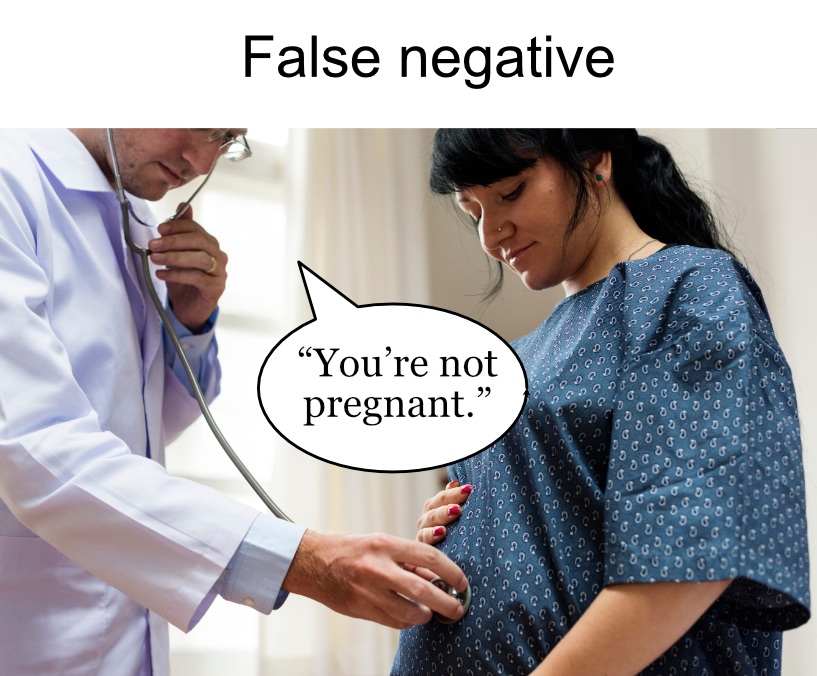
- Of people who test negative for pregnancy, how many are actually pregnant because the test wrongly misidentified them (false negative)?
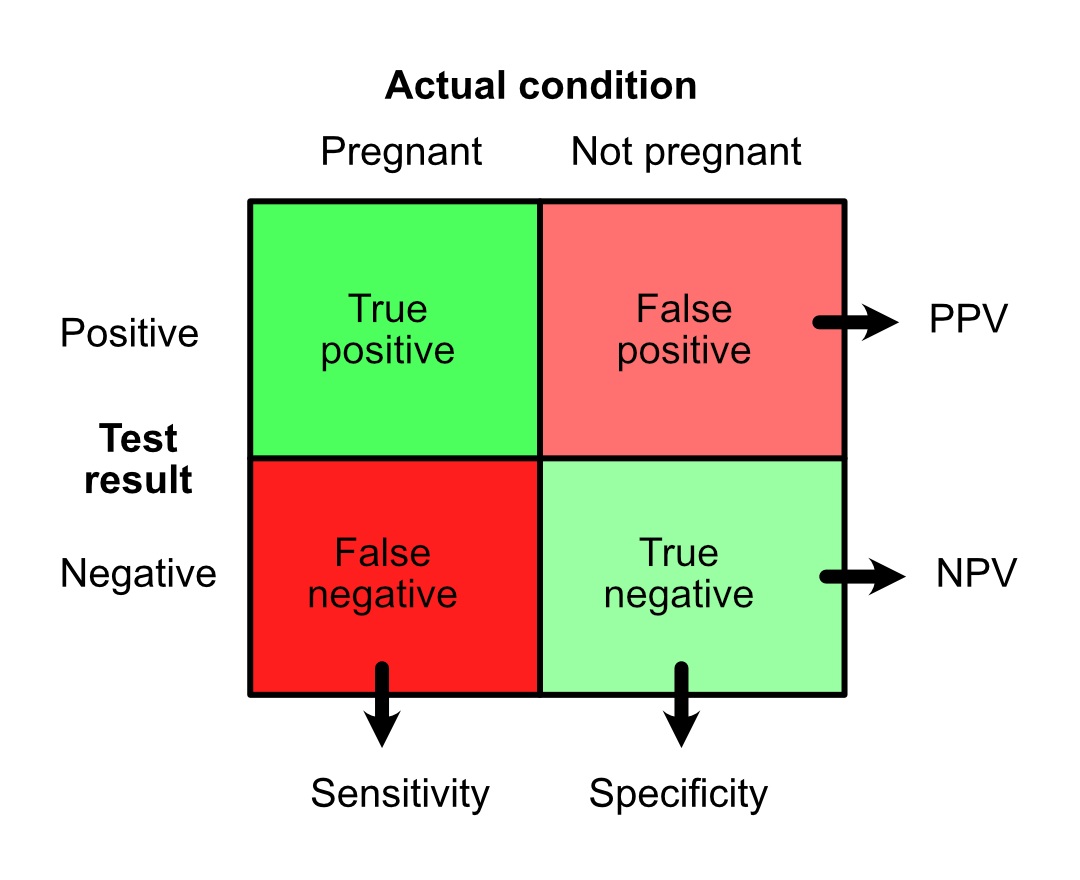
A test with high sensitivity does a good job of finding all the people who have the condition that the test is looking for. A test that has high specificity does a good job of ruling out all the people that do not have the condition.
However, a test can have any combination of high or low sensitivity and specificity, such as high sensitivity/low specificity or low sensitivity/high specificity.
By knowing how many true positives, false positives, true negatives, and false negatives occur in the population of people taking the test, you can also figure out the positive predictive value (PPV) and negative predictive value (NPV) of the test.
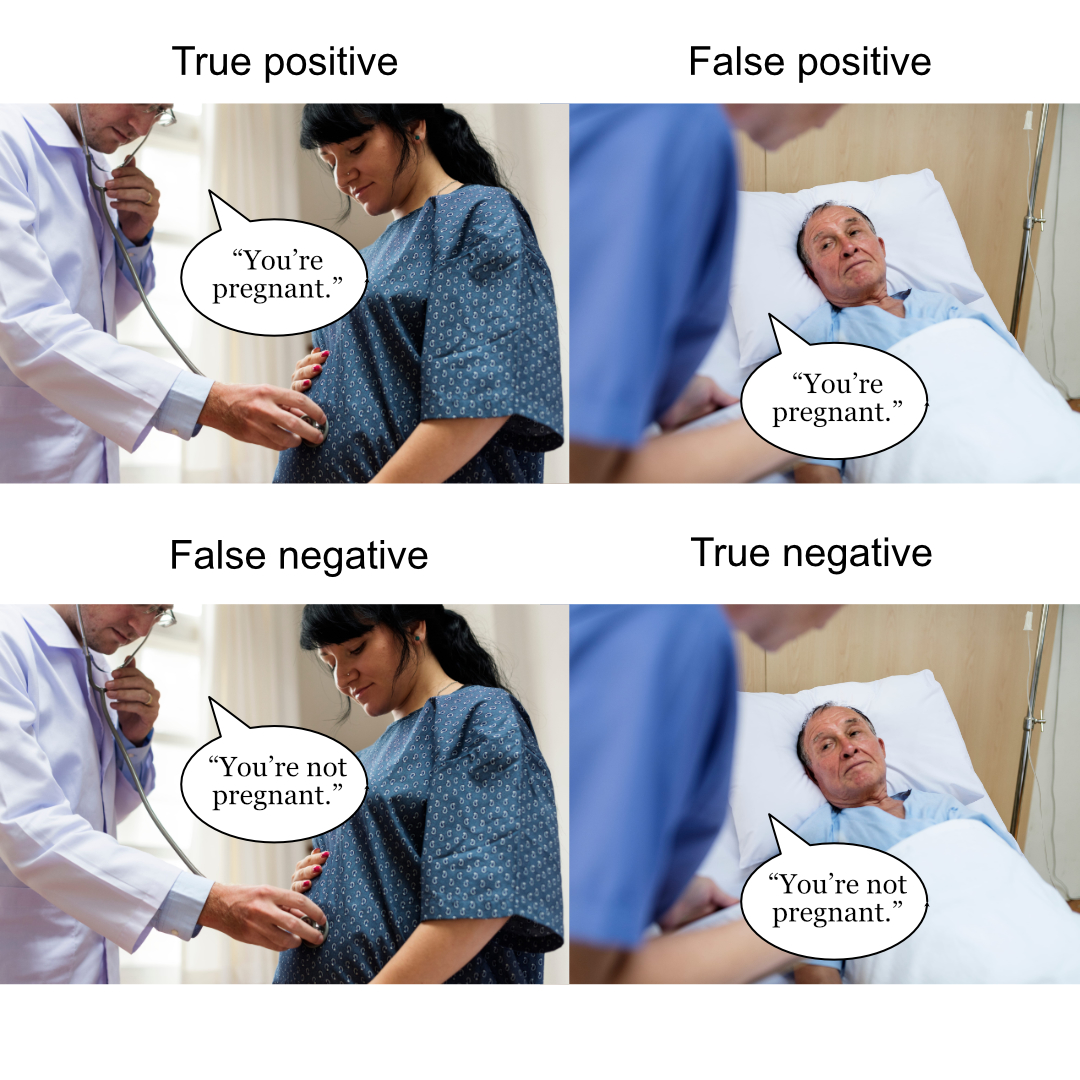
For the sake of example, in the pregnancy scenario, let’s say a quick online search reveals that the test she used has 99.1% sensitivity, 87.8% specificity, 87.6% positive predictive value, and 98.9% negative predictive value.
This means that both of the risk and likelihood tests are pointing to the same result: You should treat this client as pregnant (also taking her medical history into account) unless she later tells you that she isn’t.
The risks of treating her as pregnant are lower than the risks of treating her as though she’s not, and the high test accuracy means she probably is pregnant, and the positive pregnancy result is probably correct.
If the sensitivity and specificity rates in the scenario are lower, then that means that it is slightly less likely that she is pregnant. You could then talk to her about what she would like in a massage today. If she wanted deeper work, you could consider what your own experience and risk tolerance have taught you about how you want to practice.
Some massage therapists might consider working deeper if there was less chance she was pregnant. Others might consider treating her as if she is indeed pregnant. This would be a case of shared decision-making between you and your client to reach an agreement of how you both want to proceed.
Anatomy, physiology, pathology, psychology, and therapeutic communication are some of your resources for thinking about risks. And there are risks to avoiding massage as well. If you’re too cautious and won’t massage a pregnant client at all, that client will miss out on the benefits and improved quality of life that massage provides.
Find the best balance for every client, and sensitivity and specificity are two methods that we can use in seeking that therapeutic balance.