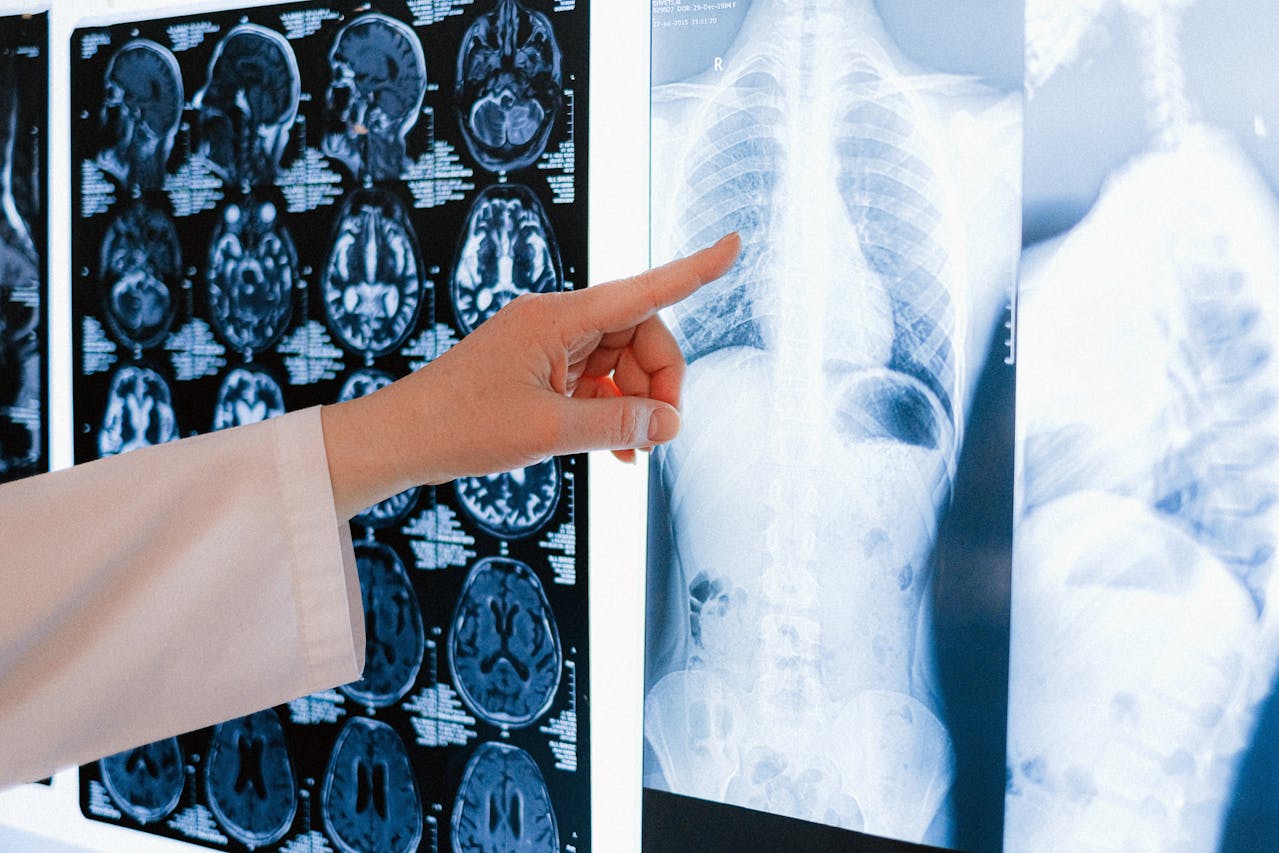
Even as clinical guidelines discourage routine imaging for low back pain, many patients continue to ask for MRIs, X-rays, or CT scans. Not necessarily for diagnosis, but for something harder to measure: reassurance. A 2025 study published in BMC Primary Care suggests that imaging is less about medical necessity and more about feeling certain, validated, and being taken seriously for many patients.
Low back pain affects millions globally and is a leading cause of disability. Yet decades of research have shown that routine imaging does not improve outcomes like pain or function. Unless there are signs of serious underlying disease, scans are usually unnecessary. Led by Dr. Lynn Haslam-Larmer and her colleagues, the study found that the answer lies as much in psychology as in medicine.
“I just want to know what’s going on”
Haslam-Larmer et al. interviewed 28 patients in Ontario, Canada, about their experiences with low back pain and their views on imaging. They found that patients equate imaging with clarity, meaning they want a scan because it would finally “show what’s going on,” or confirm what their body is trying to tell them.
Since low back pain is often marked by less visible symptoms and uncertain causes, imaging becomes a way to make the problem tangible.
“I need proof that something is wrong”
For some patients, the motivation runs deeper. Patients in the study frequently framed imaging as a way to legitimize their pain to themselves and to others.
According to the study, several participants expressed frustration that without a visible abnormality, their suffering could be dismissed. To them, imaging would provide a concrete sign that the pain is real. As one participant put it, it can feel “easier to trust an image” than a clinician’s assessment alone.
“What if they’re missing something?”
Fear also plays a central role. Patients often described imaging as protection against worst-case scenarios.
The study found that “fear of the unknown” frequently outweighed concerns about potential downsides, such as radiation exposure or unnecessary findings. In that context, requesting a scan becomes a form of coping, a way to reduce anxiety.
The researchers also found that patients can be fluid with their beliefs. At the start of their care, most participants did not strongly believe imaging was necessary. But months later, many said they wished they had received it.
The shift suggests that reassurance from clinicians may fade over time, especially as patients encounter new symptoms, outside opinions, or lingering uncertainty. In other words, the desire for imaging may grow, not shrink, as time passes.
What clinicians are up against
The findings highlight a challenge for clinicians: decisions about imaging are not just clinical—they are deeply communicative.
As the authors note, patients often seek more than diagnostic information, tying imaging to “certainty, reassurance, and validation” of their condition.
The study also suggests that clinicians themselves become part of what shapes those beliefs. In the authors’ words, clinicians act as “situational stimuli” that influence how patients understand their pain and the perceived value of imaging.
That dynamic can be fragile. Even when clinicians provide reassurance, its effects may be temporary, as patients’ beliefs are “susceptible to ongoing modification” through new symptoms, outside information, and personal reflection.
To counter this, the authors emphasize the need for communication that evolves with the patient. They suggest clinicians should provide “consistent and contextualized messaging that meets the patient’s ongoing illness experience” to reduce unnecessary imaging.
The study’s findings align with a large body of research on low back pain. For example, a 2009 systematic review by Chou et al. found that routine imaging for low back pain “does not improve clinical outcomes” compared to usual care without imaging. The review concluded that imaging provides no meaningful benefit in pain, function, or quality of life for patients without suspected serious conditions.
Similarly, a 2015 systematic review by Brinjikji et al. examined imaging findings in asymptomatic individuals and found that many so-called abnormalities—such as disc degeneration—are extremely common even in people without pain. The authors reported that these findings are often incidental and “may be part of normal aging rather than the cause of pain.”
More recent evidence reinforces these concerns. A 2021 systematic review on early MRI use found that imaging can be associated with longer disability duration, suggesting that scans may contribute to worse downstream outcomes rather than improved recovery.
Taken together, the literature suggests that while imaging can appear to offer answers, it often fails to improve outcomes and may instead increase anxiety, reinforce harmful beliefs, or lead to unnecessary interventions.
The study itself is limited in scope.It includes just 28 patients, all from one region in Canada, and relies on interviews conducted within an average of seven months after patients’ care episodes. Therefore, their accounts may reflect evolving perceptions rather than real-time experiences.
The researchers also acknowledged that participants “may have had varied experiences” in the time between care and interview, including recovery, worsening symptoms, or new episodes, factors that “could have influenced their… perception of the value of imaging.”
The authors noted that their dataset “may be biased toward the views of patients who were not fully satisfied,” suggesting that participants may have been more likely to hold strong opinions about imaging.
Still, the themes identified—uncertainty, validation, fear—echo across larger studies and systematic reviews, suggesting they reflect a broader pattern.

Dezare Lozano
Dezare graduated from of San Diego State University in 2025 where she earned a degree in journalism with a minor in English. During her studies, she emphasized news writing and gained experience reporting and producing news stories.
Dezare is focused on expanding her skills across additional areas of journalism, including working in a newsroom at a large newspaper organization and traveling to capture compelling photojournalism. She also aspires to become a journalism professor in the future.
In her free time, Dezare enjoys sharpening her camera and writing skills. She also likes cooking, animating, and working on creative writing side projects.