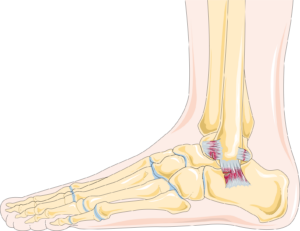
Illustration of ankle ligaments with small tears

Sprain vs Strain: How to Tell the Difference

The terms strain and sprain are often used interchangeably but they are not the same thing. Strains are injuries to muscles and tendons whereas sprains are injuries to joints and ligaments. Neither term would be correct for describing damage to a nerve, however, both sprains and strains can be accompanied

Read more »
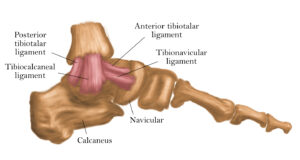
medial ankle ligaments

Anatomy of the Medial Ankle Ligaments and Injuries

Medial ankle sprains often occur when the foot is twisted inwards or dorsiflexed too far, stressing or tearing one or more of these ligaments. They can be caused by physical trauma, such as a fall, sudden movements during sports, or incorrectly landing a jump. Current evidence suggests that of all

Read more »
therapist sprays antispetic on ankle before bandaging it

Is My Ankle Broken or Sprained? A Review of Treatments

Roughly 30,000 ankle injuries occur everyday in the U.S. making it one of the most common musculoskeletal injuries. Ankle sprains are common for a number of reasons. We often demand that our ankles traverse uneven terrain such as grass, gravel, and sand.  Wearing shoes that are more fashionable than functional

Read more »
wrist sprain injury bandaged

Can a Wrist Sprain Turn Into a Fracture?

Wrist injuries, including fractures and sprains, are quite common and often occur in sports, falls, and accidents. The wrist is a complex joint that is involved in many activities of daily living and often endures repetitive stress and trauma. Wrist sprains, on the other hand, are more common in younger

Read more »
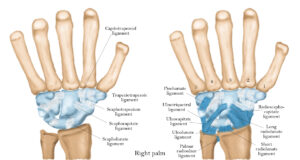
wrist ligaments anatomy

Wrist Ligaments Anatomy and Injuries

The wrist is a complex yet delicate joint, consisting of 20 joints that are connected by tendons, ligaments and bones with varying degrees of stability and range of motion. Sprains to the wrists, ankles, and knees are some of the most common sports injuries, occurring in thousands of athletes each

Read more »
A woman swimming underwater wearing goggles (left), a woman running (center), a woman riding a bike (right)

Why the SAID Principle Matters in Your Workout

The SAID principle (acronym for “specific adaptation to imposed demands”) basically means that when your body undergoes some form of stress, like exercise, it will adapt to that stress so that you perform better in the future. Your body will also require less effort and energy to do the work.

Read more »
A man does a push-up on top; a man does a bench press on the bottom.

What Is Functional Strength Training, and Is It Just a Marketing Hype?

Unlike other types of strength training, functional strength training currently has no common definition. Some personal trainers subscribe to functional strength training as an approach based on the SAID principle (Specific Adaptation to Imposed Demands), which states that muscles adapt to specific tasks we require from them.  Others define it

Read more »
A muscular Chinese woman on the left and an Eastern European young woman doing the Olympic lift on the right.

How to Train for Hypertrophy vs. Strength, According to Science

Although the terms are often used interchangeably, strength and hypertrophy are different things. Strength refers to your ability to generate force. Hypertrophy simply describes an increase in muscle size. The two concepts should be thought of as distinct but related; an increase in muscle strength can lead to an increase

Read more »
comparison of concentric muscle contraction vs eccenctric contraction with a man doing a bicep curl with a dumbbell

Is Concentric or Eccentric Contraction Better for Bigger Muscles?

Knowing how and when to program different types of muscle contraction is like having a cheat code for reaching your fitness goals. If everyone in the gym knew how to program to reach their goals, the diet and fitness industry would not be the multimillion-dollar juggernaut that it is.  Think

Read more »
Relative strength comparsion between a 120-lb person and a 200-lb person lifting at 50% of their body weight.

Different Types of Strength to Maximize Your Workout Time

Strength training is not limited to a single type. For example, if you want to increase your maximum strength for powerlifting or just want to see how much you can lift, you might go for heavy, low-repetition and high-set exercises. However, if you’re looking to improve muscular endurance for long-distance

Read more »