Trunk muscle activity may not play a major role in explaining lifting-related low back pain among manual workers, according to a 2025 study published in Musculoskeletal Science and Practice.
The findings challenge a long-standing assumption in occupational health and rehabilitation that people with low back pain change the way they activate their trunk muscles while lifting. The researchers also found little evidence that increases in pain or fatigue substantially change muscle activity during repeated lifting.
“This implies that trunk muscle activity during lifting may be of lesser importance than previously thought in people with lifting-related [low back pain] with low levels of disability,” they concluded.
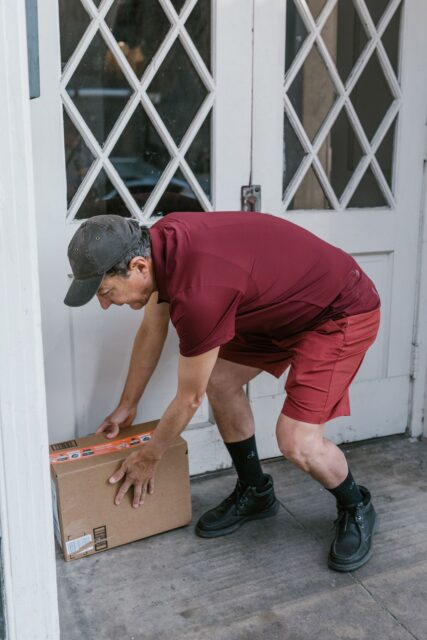
The research team, led by Dr. Nic Saraceni of Curtin University, recruited 42 manual workers employed in jobs involving frequent lifting, including tradespeople, shelf stackers, stock pickers, and packers. The study compared 21 workers with lifting-related low back pain and 16 workers without a history of low back pain. Participants averaged between ages 32 and 38 years and were predominantly men.
To measure muscle activity, the researchers used surface electromyography (sEMG) sensors placed on abdominal and back muscles. Participants completed a 100-lift task, beginning with an empty box and progressing to a box weighing 10% of their body weight. Workers were allowed to use their preferred lifting technique and speed.
The findings showed no meaningful differences in trunk muscle activity between workers with low back pain and those without it. This was true for both abdominal muscles and spinal extensor muscles.
Although workers with low back pain reported higher levels of pain and fatigue as the lifting task progressed, these changes were rarely associated with changes in muscle activation patterns.
Peak abdominal muscle activity remained relatively low throughout the lifting task, while the back muscles generated higher levels of activation. However, these patterns were largely similar in both groups, Saraceni et al. reported.
“Our sEMG results question the importance of trunk muscle activity during lifting in people with lifting-related low back pain,” they wrote.
The bigger picture
Low back pain is one of the most common musculoskeletal conditions worldwide and is often associated with physically-demanding jobs. Repetitive lifting, carrying, and manual handling tasks have long been viewed as important risk factors, leading workplace guidelines to emphasize specific lifting techniques designed to protect the spine.
For decades, workers have commonly been advised to squat when lifting, avoid bending their backs, and consciously brace their core muscles. These recommendations are often based on the assumption that certain lifting strategies reduce spinal stress and lower the risk of injury.
However, recent research has increasingly challenged these beliefs.
A 2020 systematic review and meta-analysis by Saraceni et al. examined the relationship between lumbar spine flexion during lifting and low back pain. After reviewing the available evidence, they concluded that “greater lumbar spine flexion during lifting was not a risk factor” for low back pain onset or persistence. The authors reported little evidence that bending the lower back during lifting contributes to developing or maintaining low back pain.
The 2025 study also builds on another 2020 systematic review by Nolan et al., which examined evidence from nine studies comparing lifting behavior and muscle activity in people with and without low back pain.
Nolan et al. found mixed results across the literature. While some studies reported increased activation of abdominal and back muscles among people with low back pain, others found no significant differences. The researchers noted that “most studies (n = 8 studies) reported that people with [low back pain]lift differently to pain-free controls.”
However, they found less consistent evidence regarding trunk muscle activity. Nolan et al. noted that studies involving participants with higher pain levels and greater disability were more likely to report altered muscle activation patterns.
The participants in the 2025 study generally reported relatively mild pain and disability, which may help explain why no differences emerged between groups.
Previous individual studies have likewise produced inconsistent findings. Research by Marras et al. reported greater abdominal muscle activation among people with low back pain during lifting tasks.
Similarly, Hemming et al. found increased activation in certain trunk muscles among participants with low back pain.
However, participants in these studies generally reported substantially higher pain levels than those included in the 2025 study. Differences in lifting protocols, load weights, lifting speed, and the number of lifting repetitions may also help explain the different findings.
The 2025 study also found little evidence that increasing fatigue changed trunk muscle activity during the lifts. Workers with low back pain reported substantial increases in perceived fatigue, but these changes were largely unrelated to measured muscle activation patterns.
Saraceni et al. noted that fatigue is a complex phenomenon influenced by both biomechanical and non-biomechanical factors. Therefore, muscle activity alone may not fully explain why repetitive lifting provokes symptoms in some workers.
“For clinicians, this study highlights the complex and individual nature of lifting-related back pain, where single biomechanical parameters such as muscle activity do not differentiate people (at a group level) with and without [low back pain],” Saraceni et al. wrote.
They suggested clinicians should consider combinations of factors, such as lifting speed, lifting posture, physical fitness and conditioning for the task, fatigue, lifting confidence, pain-related fear, and workplace satisfaction.

Dezare Lozano
Dezare graduated from of San Diego State University in 2025 where she earned a degree in journalism with a minor in English. During her studies, she emphasized news writing and gained experience reporting and producing news stories.
Dezare is focused on expanding her skills across additional areas of journalism, including working in a newsroom at a large newspaper organization and traveling to capture compelling photojournalism. She also aspires to become a journalism professor in the future.
In her free time, Dezare enjoys sharpening her camera and writing skills. She also likes cooking, animating, and working on creative writing side projects.